


"Ozempic Face": Why Weight Loss Can Age Your Skin — and What Helps
Updated: Oct 3
You did the hard part. The weight is coming off, you feel healthier — and then you catch your reflection and your face looks… older. More hollow. A little gaunt, maybe a little loose. If that's you, you're not imagining it, and there's even a nickname for it: "Ozempic face."
Here's what's actually happening, and the reassuring part — it's very addressable.
What "Ozempic face" really is
It's not specific to Ozempic — it happens with any significant, relatively rapid weight loss, including with GLP-1 medications like semaglutide and tirzepatide. When you lose weight, you don't just lose it from your body — you lose it from your face, too.
Your face has natural fat pads that keep it looking youthful and supported. When those shrink, you can be left with:
Hollowing — flatter cheeks, deeper under-eyes, more visible shadows.
Sagging or laxity — skin that had filled out now has less to hold onto, especially along the jawline and neck.
Ozempic FaceA more tired or aged look — even though you're healthier, your face can read as older.
Why it happens (and why it's not your fault)
Two things at once: the volume that gave your face its youthful shape is reduced, and skin — especially past our 20s — doesn't snap back as quickly as it used to. The result is a face that can look deflated ahead of the rest of you. It's a structural change, not a skincare failure.
The good news: this is one of the most treatable concerns we see
The goal isn't to undo your weight loss — it's to restore the support and structure so your face matches how good you feel. That usually means thinking in layers:
Rebuild collagen and volume gradually — a biostimulator like Sculptra works with your own body to restore support over time, for a result that looks like you, not "done."
Restore targeted volume — dermal fillers can gently replace volume in specific areas (cheeks, under-eyes, jawline) that lost the most.
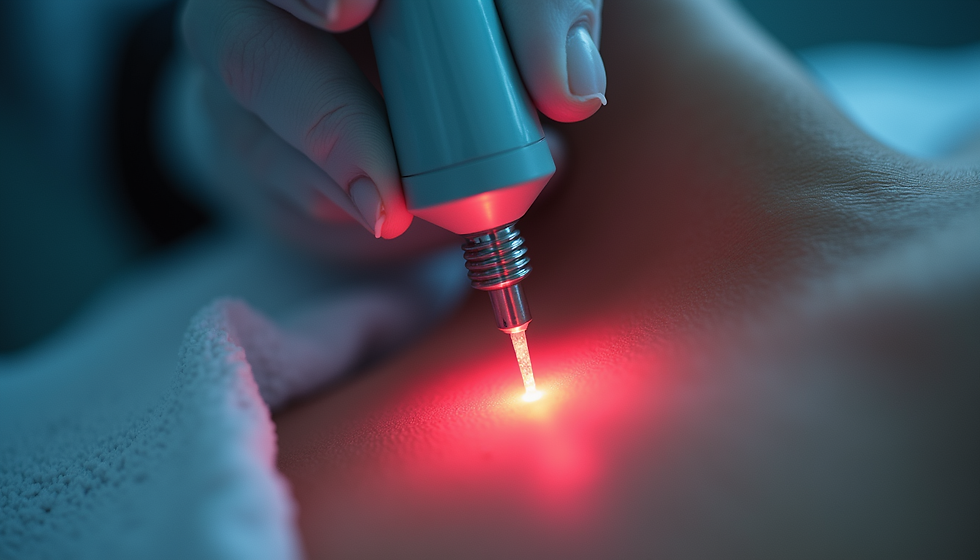
Address laxity — PDO thread lifts can offer a subtle lift, and skin-quality treatments like microneedling or Aerolase can support firmer, healthier-looking skin.
A staged plan, not a single fix — the most natural results come from a sequence mapped to your face, not everything at once.
Many post-weight-loss clients do best with a combination approach — think rebuild (Sculptra) + lift (threads) + refine — layered over a few visits. That's a conversation for your provider, who'll map it to your goals and your timeline.
A note if you're still losing weight
If your weight is still changing, that's worth saying out loud at your consultation — it affects timing and what makes sense first. Sometimes the smartest move is to start with approaches that flex with you, and save others for when things settle. Honest sequencing beats rushing.
Where to start
Not sure whether you're looking at volume loss, laxity, skin quality — or a mix? That's exactly what our Weight-Loss Skin quiz helps sort out in a couple of minutes, and it's a great thing to bring to a consultation.
At One Aesthetics in College Park, our providers specialize in natural, refined results — restoring your face so it looks rested and like you, never overfilled. Book your complimentary consultation and let's talk through a plan that fits where you are.
Individual results vary. GLP-1 medications are mentioned here as context only; any medical weight-loss care is provided under medical supervision. This article is educational and not medical advice.

Comments